
Recycling guide · Sydney
What happens to demolition
waste in Sydney
Concrete, brick, metal and timber are sorted on site and sent to licensed recyclers; asbestos goes only to a licensed landfill. Here is how the sorting works, why the waste levy matters and what records you receive.
Gabrael House Demolition · Published · Updated
In this guide
A quote for your property
Share the address and your plans. We will arrange a free site assessment.
Free site assessment1300 329 6007am to 7pm, seven days
What comes off a house
A single-storey Sydney home produces a surprising tonnage when it is taken apart: concrete slab, footings and paths; bricks and mortar; roof tiles or metal sheeting; framing timber, flooring and joinery; plasterboard; glass; steel lintels, gutters, pipes and reinforcing; and a mix of fixtures, insulation, carpet and packaging. Where the house is older, bonded asbestos sheeting may sit on top of that list and must be kept apart from everything else.
Gabrael recycles more than 85% of the demolition material we handle. Reaching that figure is not a matter of sending everything to one place and hoping. It comes from sorting on site, choosing the right facility for each stream and keeping asbestos entirely separate. This guide explains how that works and what records you receive when the job is finished.
How materials are sorted on site
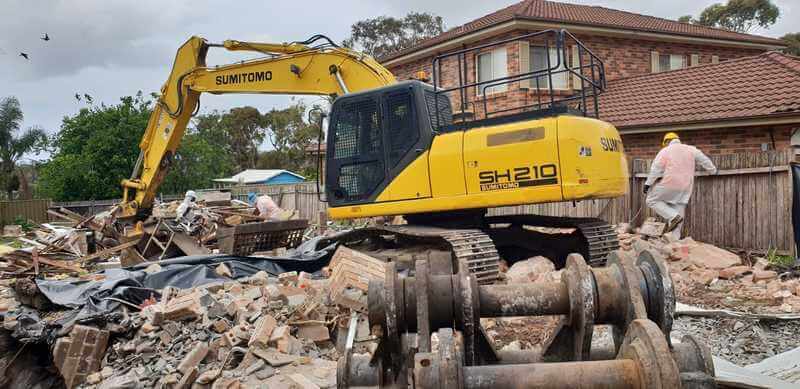
Sorting starts before the excavator does. An internal strip-out removes the items that would contaminate the heavy streams if they were crushed together: carpet, curtains, appliances, plasterboard, loose timber, glass and any suspect asbestos. Once the structure comes down, the machine separates the remaining material into piles or bins by type. Mixed loads cost more to dispose of and are harder to recycle, so a clean separation pays for itself.
| Material | How it is handled | Where it usually goes |
|---|---|---|
| Concrete, brick and tile | Kept free of soil, timber and plaster; large pieces broken down | A construction and demolition recycler, where it is crushed and screened into road base and aggregate |
| Steel and other metals | Separated from concrete and timber; reinforcing, roofing, gutters, pipes and appliances | A scrap metal recycler |
| Timber | Untreated framing and flooring kept apart from painted or treated timber | Chipping for mulch, biomass or manufactured wood products, depending on the recycler’s acceptance criteria |
| Plasterboard | Removed during strip-out so it does not contaminate the concrete stream | A plasterboard recycler where available, otherwise licensed landfill |
| Soil and fill | Assessed for contamination where the site history suggests it | Reused on site, classified and sent to a resource recovery facility, or disposed of according to its classification |
| Mixed residual waste | Kept as small as possible | A licensed transfer station or landfill |
| Asbestos and other hazardous material | Removed first under licence, wrapped and labelled, never mixed with recyclables | A landfill licensed by the NSW EPA to accept asbestos waste |
Salvage sits alongside recycling. If you want to keep sandstone blocks, hardwood floorboards, period fireplaces, doors or bricks, tell us before demolition so they can be removed by hand rather than by machine. Whether an item is worth salvaging depends on its condition and how it was fixed, and it is agreed in the written scope rather than decided on the day.
The NSW waste levy and why sorting matters
NSW charges a waste levy on most waste received at licensed landfills in the metropolitan and regional levy areas, which include Sydney. The levy is set per tonne, is adjusted each financial year and is paid by the facility operator, who passes it on through the gate fee. Its purpose is to make landfill the more expensive choice so that materials are recovered instead.
For a demolition, the effect is straightforward. Clean, well-sorted concrete, brick and metal going to a recycler do not attract landfill gate fees in the same way that a mixed load tipped at landfill does. Poorly sorted loads, loads contaminated with plasterboard or soil, and any material the recycler rejects end up paying the levy. That is why the strip-out and on-site separation are part of the demolition method, not an optional extra.
We do not quote levy figures in this guide because they change. The current rates and levy areas are published by the NSW EPA, and the disposal component of your quote reflects the rates that apply when the work is done. Ask for the disposal and recycling assumptions to be stated in the quote so you can compare like with like, as explained in our house demolition cost guide.
Licensed construction and demolition recyclers
Facilities that receive and process construction and demolition waste in NSW operate under environment protection licences or the EPA’s resource recovery framework, depending on their size and what they accept. Recycled aggregate and road base produced from demolition concrete must meet the relevant resource recovery order and exemption before it can be reused, which is one reason recyclers are strict about contamination at the gate.
Gabrael uses established Sydney recyclers for concrete, brick, metal and timber rather than a single mixed-waste contractor. A load can be turned away or reclassified if it arrives with the wrong material in it, so the sorting on site is done with the receiving facility’s rules in mind. The name of the facility appears on the weighbridge docket or receipt for each load, which is how the recycling rate for your job is evidenced.
Asbestos disposal and its paperwork
Asbestos waste has one lawful destination: a landfill licensed by the NSW EPA to accept it. It cannot go to a recycler, a transfer station that is not licensed for it, or a skip bin. The material is removed before demolition by a licensed removalist, kept wet, double-wrapped or bagged in heavy-duty plastic, labelled as asbestos waste and transported in a covered, leak-proof load.
Larger movements of asbestos waste in NSW must be tracked through the EPA’s online waste tracking system, which issues a consignment identifier that follows the load from the site to the landfill and is presented at the gate. Under the NSW waste regulation, any load of more than 100 kg of asbestos waste or more than 10 m² of asbestos sheeting must be tracked through the EPA’s WasteLocate system, so a typical fibro house removal will be tracked. Smaller amounts still go only to a licensed facility with a disposal receipt.
For your records, asbestos work produces the SafeWork NSW notification reference, the removal control plan, the tracking or consignment records, the landfill disposal dockets and the independent clearance certificate confirming the area was fit for demolition to continue. Our fibro and asbestos guide explains how those documents are produced, and our non-friable asbestos removal service sets out the Class B scope. Friable asbestos is removed by our Class A licensed partner, whose removal and disposal records form part of the same paperwork.
What you receive at handover
When the site is cleared, we review the completed scope with you and provide the records for the project file. What is included depends on the work, but for a house demolition you should expect:
- A completion certificate for the agreed demolition scope.
- Weighbridge dockets or receipts from the recyclers and, where used, the landfill, identifying the facility and material type for each load.
- Asbestos records where asbestos was present: notification reference, tracking records, disposal dockets and the clearance certificate.
- Any council or certifier sign-offs the approval conditions require at completion.
Some approvals include a waste management plan condition that requires you to show where the demolition waste went. The dockets are the evidence for that condition, so keep them with the approval. If your builder or certifier asks for a recycling summary, we can prepare one from the same records.
A demolition quote that states how materials will be sorted, which streams will be recycled and how asbestos will be removed and disposed of is easier to trust than one that lists “rubbish removal” as a single line. Bring your plans, any asbestos reports and a note of anything you want salvaged to the house demolition site assessment, and we will set out the waste and recycling arrangements in writing alongside the demolition scope.

Zac, Director, Gabrael House Demolition
Zac runs Gabrael’s jobs on site. The family business has served Sydney since 1995 and holds restricted demolition licence DE2 AD202697 and Class B non-friable asbestos removal licence AD211249.
About our team and credentialsStart with your property
Ask for the disposal plan with the quote.
Tell us what needs removing and anything you want salvaged. The written quote sets out how materials will be sorted, recycled and disposed of, with the records you receive at handover.