
Pool removal
Pool removal in Sydney
Remove an unused pool and get the yard back. We assess whether partial or full removal suits the site and the future use of the ground, then backfill and compact so the fill stays put.
Quoted after a free site assessment
Written quote for the scope agreed on site. No obligation.
- Restricted demolition DE2Licence AD202697
- $20M public liabilityWorkers compensation and professional indemnity
- Backfill and compactionTesting arranged where required
What we do
Partial or full removal?
The right method depends on what you want to do with the ground afterwards, the pool’s construction and how machinery can reach it. We explain both options at the site assessment.
Partial removal
The shell is broken down, drained and backfilled. Suits lawn, garden or paving.
Full removal
The whole shell and surrounds removed, for building over the area later.
Backfill and compaction
Fill placed in layers and compacted, with the area drained and levelled.
Fill in or fully remove?
Filling in (partial removal) and full removal both leave level ground. The difference is what stays in the ground, and that decides what you can do with the area later.
| Compare | Fill in (partial removal) | Full removal |
|---|---|---|
| What happens | The pool is drained, holes are broken through the floor for drainage, the top of the walls is broken down and the shell is backfilled. | The whole shell, floor and surrounds are broken out and taken away, then the hole is backfilled. |
| Cost | Lower: less to break out and cart away. | Higher: more breaking, more material out and more fill in. |
| Best for | Lawn, garden beds or paving. | Building over the area later, such as an extension, granny flat or new house. |
| Building over it | Usually not suitable without an engineer’s advice. | Possible with engineered fill and compaction testing. |
| When you sell | The buried shell may need to be disclosed. | Nothing left in the ground; keep the records. |
Approval. Some pool removals can go ahead without a DA; the council or certifier confirms it for your property. See the approval question.
Pricing
Pool removal cost in Sydney.
Pool removal is quoted after a free site assessment, because two pools of the same size can be very different jobs. These are the six things that decide the price.
What sets the price
- Fill in or full removal. Filling in leaves part of the shell, so there is less to break out and cart away.
- Construction. Concrete takes more breaking but can usually be recycled; fibreglass is quicker but usually goes to landfill.
- Size and depth. A bigger, deeper pool means more material out and more fill in.
- Access. A narrow side passage or no rear access can mean a smaller machine and more time.
- Fill and compaction. Clean fill placed in layers, with testing if you plan to build over the area.
- Surrounds. Paving, coping, decking, fencing and the pump and filter equipment.
Tell us at the assessment if you might build over the area later: it usually means full removal with engineered fill, which costs more now but avoids a second dig. Quotes are in Australian dollars, with no obligation.
The process
From assessment to level ground.
Assess the pool
Construction, access, services and what the ground is for afterwards.
Drain and break out
The pool drained, equipment disconnected and the shell broken out.
Backfill and compact
Drainage provided, fill placed in layers and compacted, testing as needed.
Finish and document
Left level to the agreed finish, with disposal and compaction records.
What the ground can be used for afterwards
Partial removal suits lawn, garden and paving; to build over the area later, choose full removal with engineered fill and keep the records.
Trusted by
Builders, clients and Google reviews.
The builders and council shown here are clients Gabrael has carried out demolition for. The reviews are quoted from Google.
Serving Sydney since 1995, and Australian Trades Small Business Champion in 2023 and 2025. We recycle over 85% of demolition materials. Read about our recognition
Demolition contractor to Sydney builders and clients, including







“Gabrael House Demolition worked on the property next door to us… They were incredibly respectful of our property, took their time to do things carefully, and made sure to communicate with us whenever there was any potential safety concern”
“Zac, Eddie and Victor went above and beyond expectations”
See the work
On site with Gabrael.
Our own crew and machinery on the job. See the full gallery
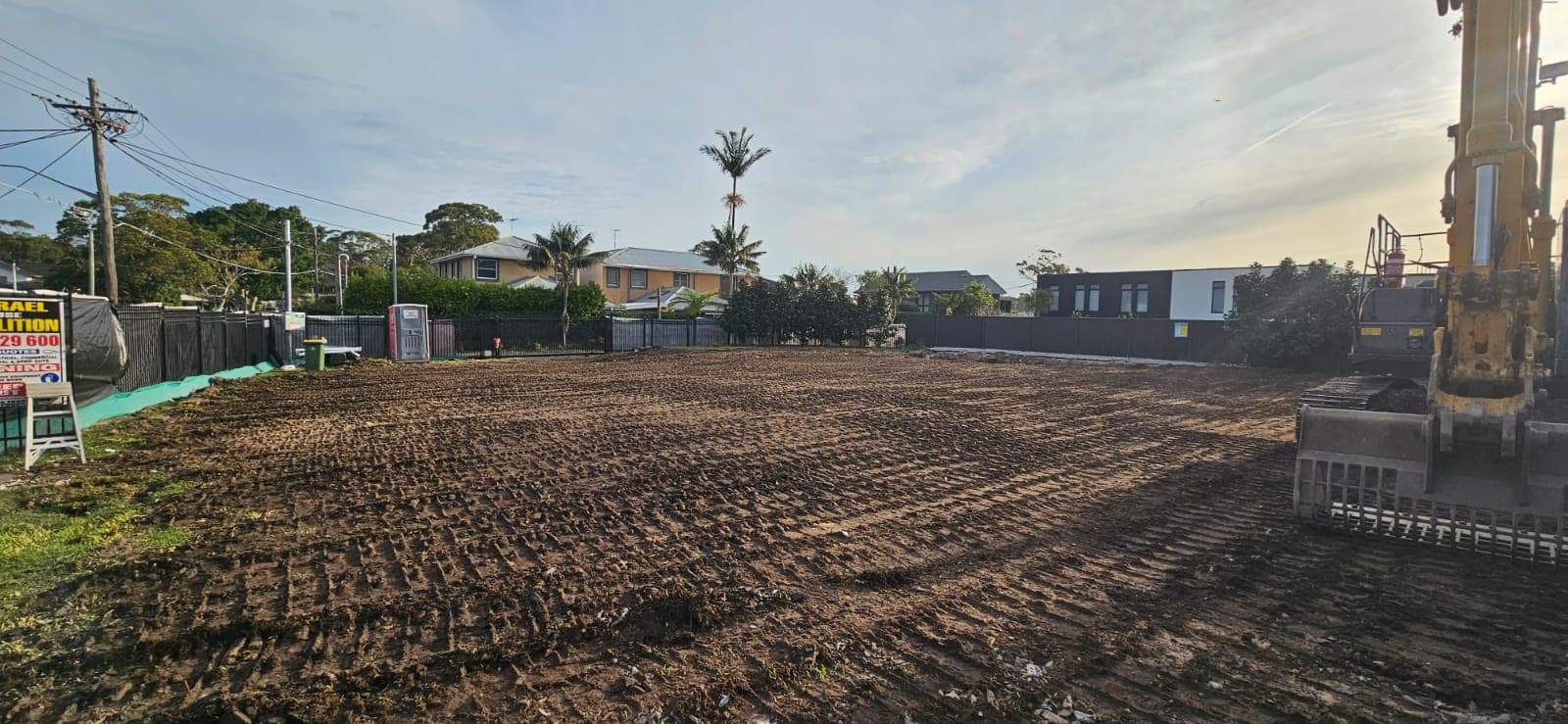
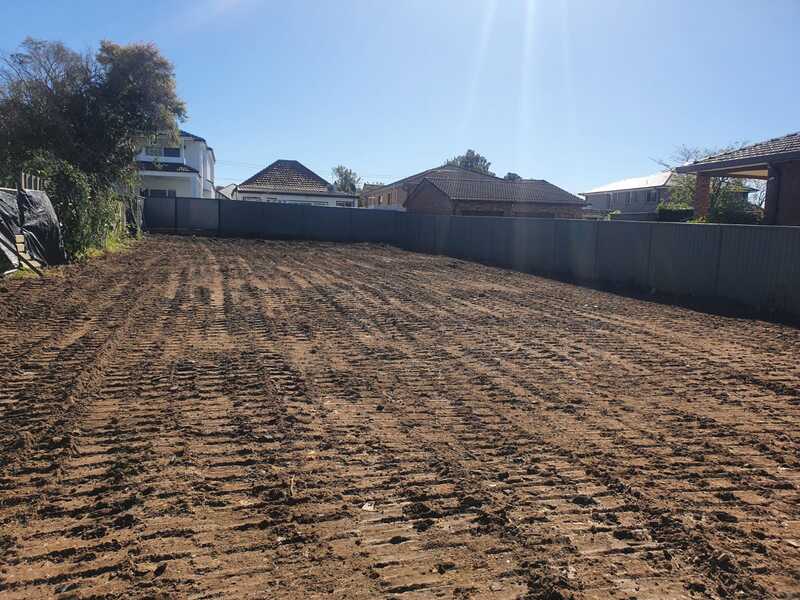
A wide view across the cleared site 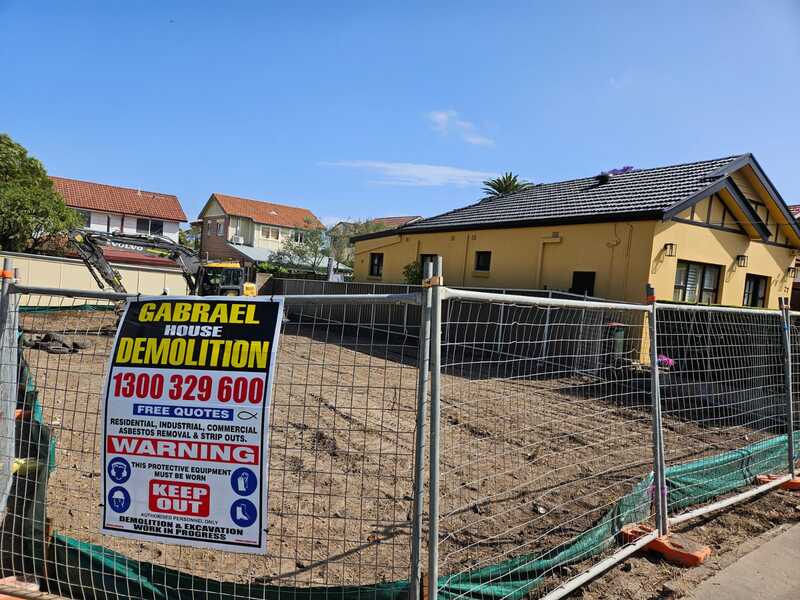
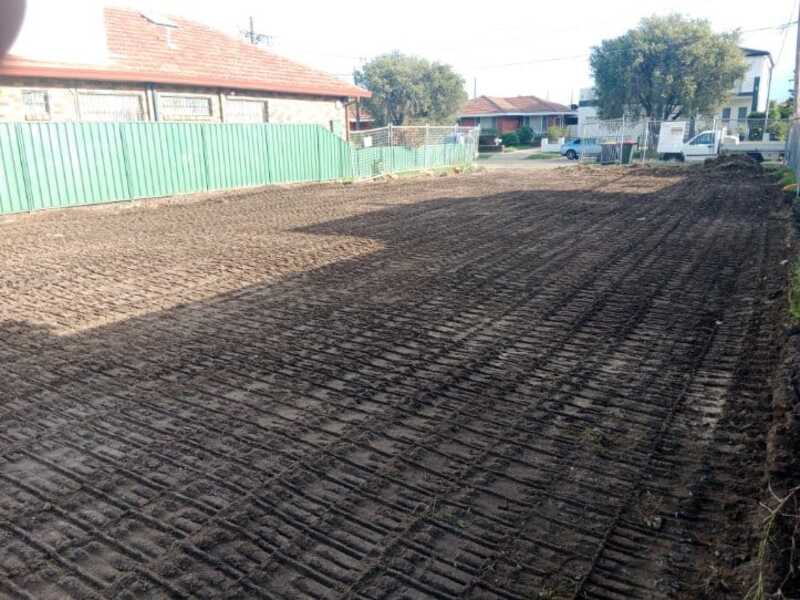
Fenced residential site after clearance 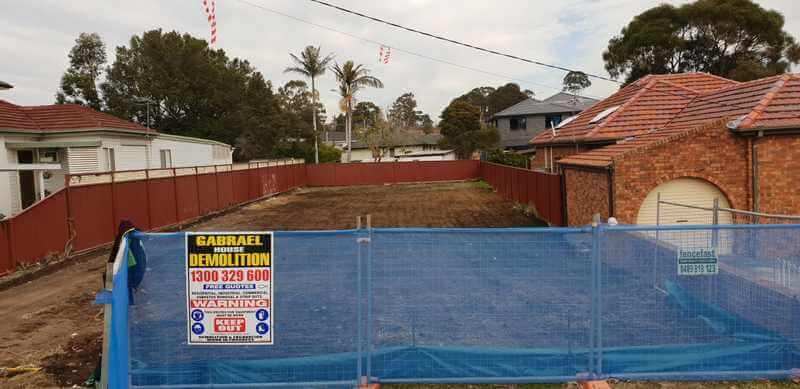
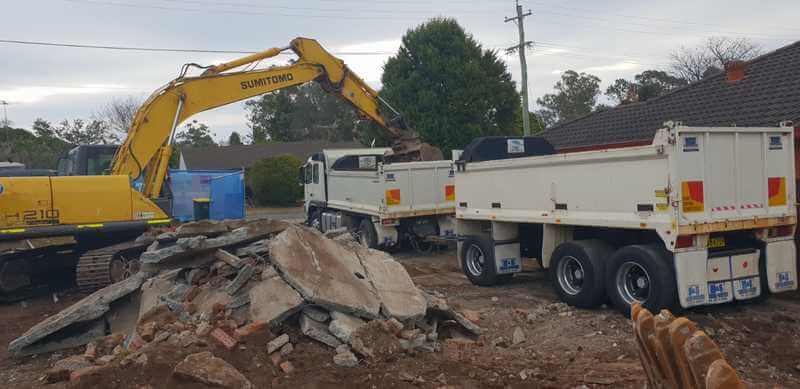
Cleared block between neighbouring houses 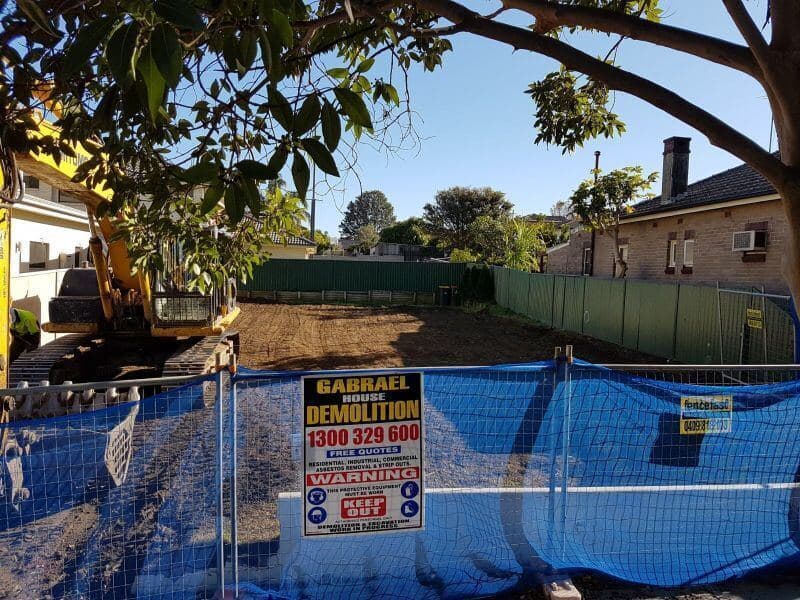
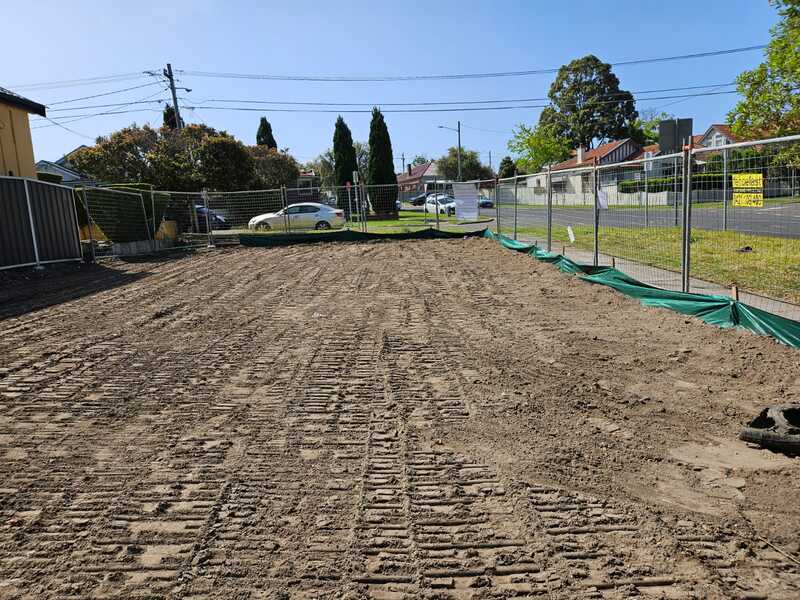
Site cleared within the boundary fencing
A short guide
Backfill and approvals: what to know.
Most of a good pool removal is decided before the machine arrives: whether you need approval, and how the hole is filled.
Read the demolition approvals guideCheck the approval first
Some pool removals can go ahead without a development application, where the property and the work meet the State policy’s conditions; others need a DA or CDC, for example on heritage properties. The council or a certifier confirms it for your address, and we can tell you what to ask.
Drain and disconnect properly
The pool is drained in line with the approval conditions, and the pump, filter and any power or plumbing are disconnected by the right trade before breaking out starts.
Fill in layers, not in one go
Clean fill is placed and compacted in layers so the ground does not sink later. Dumping fill into the hole in one go is the most common reason a filled-in pool area settles.
Test it if you will build on it
If the area may carry a building, the fill is placed to an engineer’s specification and compaction tested, and the results go into your property records with the disposal dockets.
Keep the paperwork
Keep the approval, disposal records and any compaction results. A future certifier, engineer or buyer may ask how the pool was removed.
Before you start
Pool removal FAQs.
The questions we are asked most before this work.
More demolition FAQsHow much does pool removal cost in Sydney?
It is quoted after a free site assessment. The price depends on whether the pool is concrete, fibreglass or vinyl-liner, whether it is a partial or full removal, the size and depth, access for machinery, the amount of backfill and how the material is disposed of. We set out the options and their prices in the written quote.
Should I choose partial or full removal?
Partial removal costs less and suits lawn, garden or paving. Full removal is the safer choice if you might build over the area, or where an engineer or certifier requires it. The construction of the pool and the future use of the ground decide it, and we discuss both options at the assessment.
Do I need council approval to remove a pool?
Some pool removals can proceed without a development application where the property and the work meet the conditions of the State policy. Whether your property qualifies depends on factors such as heritage listing and how the ground is finished. Confirm the pathway with your council or a registered certifier before work is booked.
How long does pool removal take?
Most residential pool removals take a few days on site, depending on the construction, access and the amount of backfill. Full removal of a large concrete pool takes longer than a partial removal of a fibreglass shell. We confirm timing after the assessment.
Can I build over a removed pool?
It depends on how the pool was removed and how the fill was placed. Building over the area normally requires full removal and engineered fill with compaction testing, and the certifier or engineer for the new work decides what is acceptable. Tell us your plans at the assessment.
What happens to the water, pump and fencing?
The pool is drained in line with the approval conditions, and the pump, filter and any electrical or plumbing connections are disconnected by the appropriate trade before demolition. Pool fencing, decking and surrounds can be removed as part of the job or retained as you prefer.
Is a fibreglass pool cheaper to remove than concrete?
Usually the shell is quicker to break out, but fibreglass generally goes to landfill while concrete can be recycled, which affects disposal costs. Access and the amount of backfill matter as much as the material. The assessment sets out the price for your pool.
Free site assessment
Arrange a free site assessment.
Send the property address, photos of the pool and its surrounds, and tell us whether it is concrete or fibreglass if you know. Let us know how you plan to use the ground afterwards and how machinery can reach the pool.
1300 329 6007am to 7pm, seven days.
Licensed DE2 · Class B asbestos · $20M insured · ★ 4.7 from 99 Google reviews