
Asbestos guide · Before demolition
Asbestos removal before
house demolition
Suspected asbestos needs assessment before the building is disturbed. Here is how identification, licence scope, removal and clearance fit into a house demolition project.
Gabrael House Demolition · Published · Updated
In this guide
A quote for your property
Share the address and your plans. We will arrange a free site assessment.
Free site assessment1300 329 6007am to 7pm, seven days
Suspected asbestos needs assessment
A house built or renovated before 1990 may contain asbestos. Its age is a reason to investigate, not confirmation that asbestos is present. You cannot reliably identify asbestos just by looking at a sheet, tile or lining. The NSW asbestos guidance for homes explains why professional identification matters.
Before disturbing the building
Damaged or disturbed asbestos can release fibres that present a serious health risk. If you find suspect material, leave it undisturbed and arrange professional advice. Do not break a piece off to check it or start stripping materials out before assessment.
Where it may be found
Potential locations include fibro cladding, roofing, eaves, garage and shed walls, wet-area linings, flooring and pipe insulation. Renovations can conceal older materials behind newer finishes. These examples help describe the property; they do not establish the material or licence class from a photograph. Our fibro house guide covers where asbestos sits in a fibro-era home and when to test.
Match the licence to the material
Non-friable asbestos
In non-friable material, asbestos is bound into a solid product, such as some asbestos-cement sheets. Its condition still matters. Gabrael holds Class B non-friable asbestos removal licence AD211249 and confirms the material and proposed removal are within that scope.
A Class B licence is required for removal of more than 10 m² of non-friable asbestos. The SafeWork NSW Class B licence page explains the scope.
Friable asbestos
Friable material can crumble or release fibres more readily. Removal of any amount requires a Class A licence, which is outside Gabrael’s Class B licence. Friable asbestos is removed by our Class A licensed partner. If assessment identifies friable material, the removal arrangements and project sequence are agreed before work proceeds.
Inspection and testing come first
Share existing asbestos reports, the age of the building if known, and the parts you intend to demolish. Assessment needs to consider those areas and any places concealed by later work.
Where sampling is needed, use a competent professional and an appropriately accredited laboratory. A general site visit and a laboratory test are different tasks; ask what is included and what report you will receive. See NSW advice on finding an asbestos assessor.
Gabrael can discuss suspected materials during the free site assessment and confirm the next steps. We confirm who will carry out assessment, removal and independent clearance before agreeing the work.
Removal, clearance and disposal
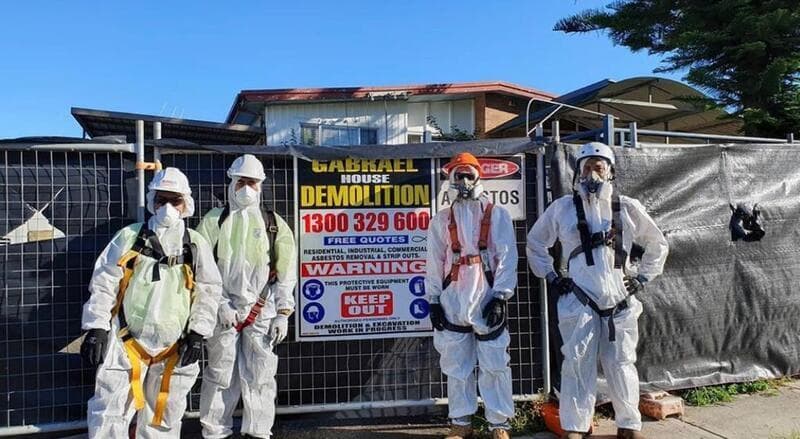
For work within our Class B scope, the agreed plan establishes the removal area, protection measures, access and waste arrangements. The removal team controls the work area and the sequence before the main demolition starts.
Allow for the required notification
For routine removal requiring notification, SafeWork NSW requires at least five calendar days’ notice. The removalist confirms the applicable notification and start date. Read the current SafeWork notification requirements; do not treat the notice period as a promise that the whole asbestos stage will finish in five days.
Clearance is separate from removal
After licensed removal, a clearance inspection and certificate are required before reoccupation. Class B clearance is carried out by a competent person independent of the removal work. Air monitoring is a separate consideration: it is not automatically required for all Class B work, though the circumstances may warrant it. Confirm these arrangements in the scope. SafeWork explains clearance and monitoring.
Keep disposal documentation
Asbestos waste must go to a facility authorised to accept it, with the relevant transport and disposal arrangements. Ask for the disposal records as part of the project documentation. Asbestos waste never goes into ordinary recycling. The NSW EPA lists accepting facilities and advises checking their requirements.
Confirm the scope before adding a cost
Standalone non-friable asbestos removal starts from $1,500. These are the same three published categories as our asbestos removal service, which lists what each one includes.
- Small area
- $1,500 – $3,500
- Bathroom, laundry or eaves (under 20 m²)
- Medium area
- $3,500 – $8,000
- Multiple rooms, a garage or a shed (20–50 m²)
- Roof removal
- $8,000 – $18,000
- Fibro roof or full cladding (50–150 m²)
Friable removal is priced separately from these bands. As a general industry guide, friable asbestos removal commonly costs about $8,000 to $25,000 or more where contamination is extensive; the material, quantity, access and air-monitoring requirements decide the actual figure.
If asbestos work is part of house demolition, check the house category before adding a separate allowance. The small-house category includes inspection; the medium and large house categories list bonded asbestos as assessed and quoted within the Class B scope. Your written quote confirms the assessed material, extent, testing, removal and clearance arrangements. See the house demolition cost guide.
How does it affect the schedule?
Inspection, any laboratory work, notification, removal and clearance all need to fit before the relevant demolition work. Their duration depends on the material, extent, access and required assessment. Agree the sequence after inspection rather than assuming a fixed number of extra days.
Leave removal to the appropriate professionals
A small quantity does not make a material safe to disturb. NSW guidance recommends using licensed asbestos professionals rather than attempting removal yourself. Keep others away from suspect damaged material and seek advice before continuing renovation or demolition work.
Discuss asbestos before the knockdown
Gabrael removes non-friable asbestos under Class B licence AD211249, and friable asbestos is removed by our Class A licensed partner. In 2024 we were named Top Asbestos Abatement Services Provider in APAC. Tell us about the proposed work and any existing reports so the assessment and removal scope can be confirmed.

Zac, Director, Gabrael House Demolition
Zac runs Gabrael’s jobs on site. The family business has served Sydney since 1995 and holds restricted demolition licence DE2 AD202697 and Class B non-friable asbestos removal licence AD211249.
About our team and credentialsStart with your property
Discuss the suspected material before work starts.
Tell us the address, proposed work and any existing asbestos reports. We will confirm the next assessment steps and whether removal is within our Class B scope.